Austria falls from 5th to 6th place on Global Peace Index – here’s what I as a Brit living in Vienna think about that
It’s a few years since I wrote about Austria’s place on the Global Peace Index. At that time, in 2022, Austria was in fifth place.
It was also in 5th place in 2023, then jumped up to the #3 spot in 2024, slid slightly down to 4th place last year and now, in 2026, has fallen again. This time to its lowest position — #6 — in quite a few years.
Not a huge slide, obviously, but still slightly worrying considering the way the world seems to be heading nowadays.
A British expat’s perspective on Austria’s fall from 5th to 6th in the Global Peace Index
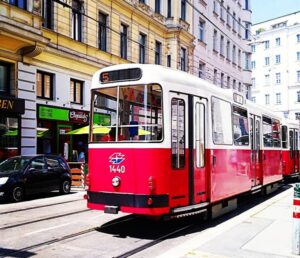
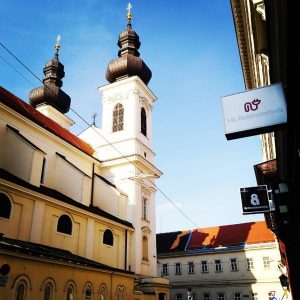
I moved to Vienna a few years ago, drawn by the same things that bring most expats here: the quality of life, the stunning architecture, the effortless public transport, and above all, the sense of safety.
Now, to be honest, I have never lived in London, the capital city of my home country, but I do know from the news and from friends who live there that knife crime, and other increasingly violent crimes, are now a constant background hum in the news.
To me then, Vienna felt like a different world. I could walk home at 2am without checking over my shoulder. My visiting parents had no need to clutch their personal belongings on the U-Bahn like they often would in the U.S. where they now live.
RELATED: How safe is Vienna anyway?
So when I saw Austria had slipped from 3rd to 6th in the Global Peace Index between 2024 and 2026, it definitely caught my attention.
It’s a small drop and, honestly, most Austrians I know have simply shrugged it off.
But as someone who chose this country precisely because of its reputation for peace (among other things), I wanted to understand what has changed in just a handful of years.
What the Numbers Say
The figures from Austria’s own internal security reports paint a picture that the postcard version of Vienna doesn’t show.
Politically motivated crime has risen across the board. Islamist extremist offenses jumped over 40% to 215 in 2024, then climbed again to 306 in 2025— a further 42.3% increase. Right-wing offenses rose 23% in 2024, and left-wing offenses spiked by a massive 120%. The terrorism warning level also remains at “High.”
I remember when the Taylor Swift concerts in Vienna were cancelled in 2024 due to an Islamic State-inspired terrorist plot by a Macedonian teenager. A plot targeting the venue was foiled.
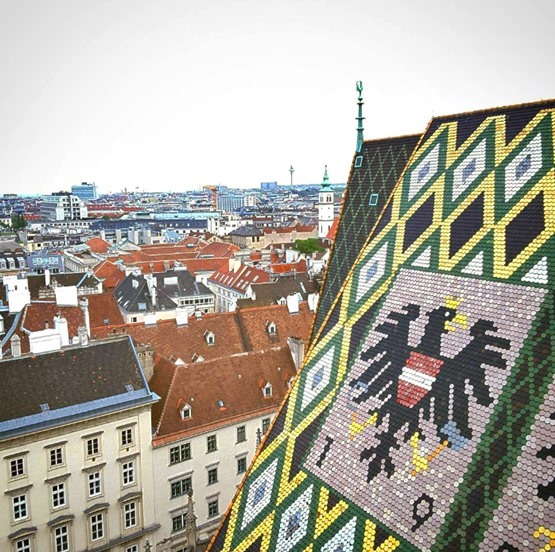
Then came reports of a planned attack on St. Stephen’s Cathedral — a place I walk past most weeks — by yet more Islamists. In other words, Austria’s slightly worse Global Peace Index ranking isn’t just abstract statistics to me anymore. Instead, it’s a reminder that the safety I have enjoyed since moving to Vienna isn’t guaranteed.
What’s Changed in My Adopted City
The wars in Ukraine and the Middle East have rippled through Vienna in ways I didn’t anticipate.
This city has always been a crossroads in Europe. A place where different communities co-exist. But, in recent years like in many places in the west, polarization seems to have deepened.
Conversations that used to be polite, and that would end in “agreeing to disagree”, sometimes now carry an edge. Online radicalization by primarily the left-wing and Islamists is pulling young people toward extremism.
The left-wing loonies supporting “Palestine” are becoming more unhinged, and pulling increasingly younger and younger people into their craziness.
For instance, over 31% of Islamist extremism suspects are under 18. That’s someone’s son, someone’s classmate. A still-young person whose life is being destroyed by fanatics online.
I have also noticed more discussion about espionage and threats to critical infrastructure in the news.
It’s not something I experience directly, but it’s both in the news, and in the air. In other words, the unspoken assumption that Austria is somehow insulated from the darker currents of European politics no longer holds.
What This Means for Austria and the GPI
The Global Peace Index measures 163 countries across three areas: societal safety and security, ongoing conflict, and militarization.
As I mentioned already, Austria’s slide from 5th to 6th isn’t a dramatic collapse as it is still one of the most peaceful nations on Earth, and frankly, far safer than where the United Kingdom now sits in 39th place.
But that ranking does reflect what many of us who moved here for the peace feel: a slow and gradual erosion of the calm we took for granted.
Sure, I still feel safe walking home at night in Vienna, and I still love this city. Maybe even more than I expected to when I moved here.
But coming from Britain, where I have watched my home country’s social fabric begin to fray over the last couple of decades, largely due to mass illegal immigration, Islamic extremism, and increasingly violent left-wing protests (the British government, of course, blames the “right-wing”, like every left-wing government does, but it’s not), I recognize the early signs.
That’s why I am here to stress that peace is not a permanent condition.
It’s something that has to be maintained, watched over, and defended. Even in a place as beautiful as Vienna.
And as someone who chose Austria partly because of its peace, I would rather notice the cracks now, and then deal with them, than pretend they aren’t there, and then have to cope with much larger ones later.
Wouldn’t you?